Newfound Sands · Bungalo Village
Our History
A century on the west shore — from farmland to Hiland Park, Bungalo Village, and Newfound Sands.
Before the 1920s
Farmland on the west shore
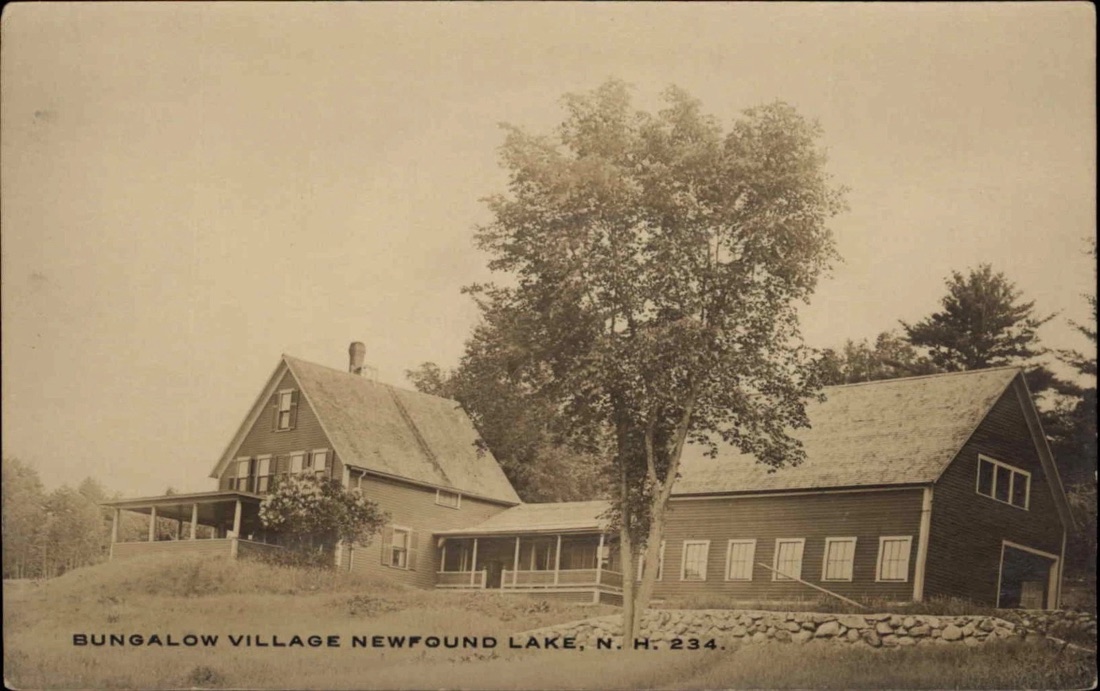
The land that became the cottage colony was farmland across the road from the lake — remembered locally as the old Kimball farm.
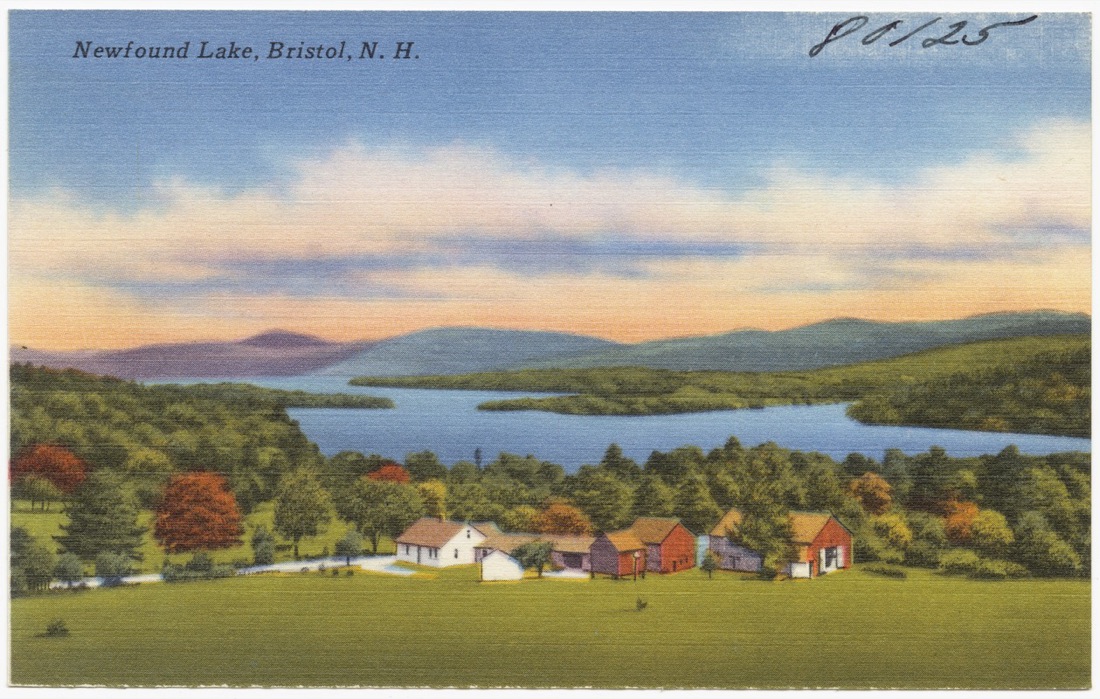
Newfound Lake, Bristol, N.H. — a farm above the lake, as the west shore looked before the cottages.Tichnor Brothers Postcard Collection, Boston Public Library. No known copyright restrictions. 1920s
W. F. Darling builds Hiland Park
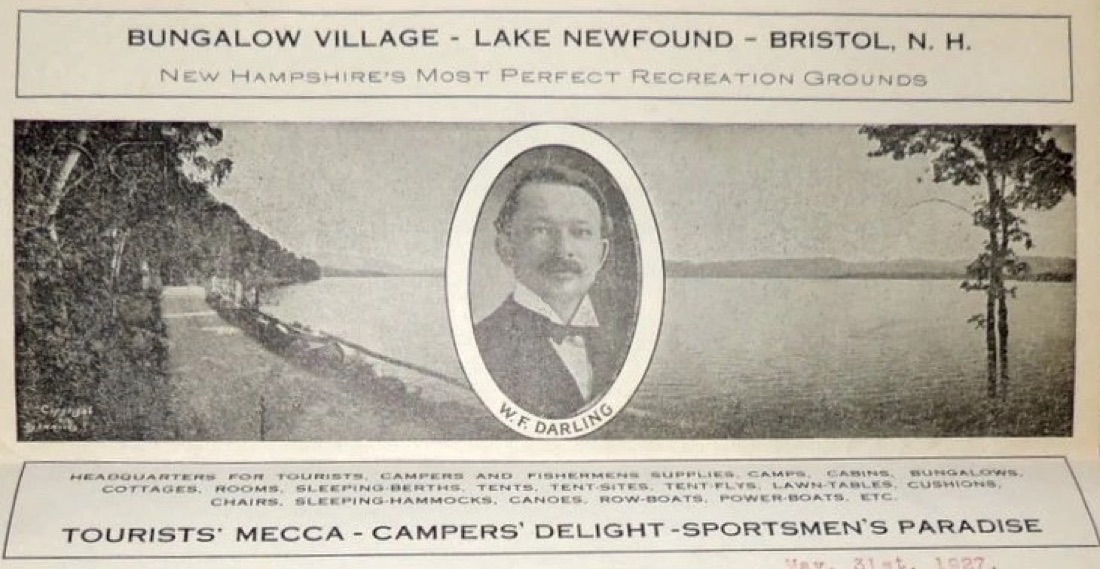
W. F. Darling of Bristol builds a colony of housekeeping cottages on the west shore. First known as Hiland Park, it lets guests rent a cottage by the week or the season, cook their own meals, and take in the lake view from their own porch — a friendly alternative to the grand hotels then ringing the lake. His letterhead — carrying his own portrait — calls it “Tourists’ Mecca, Campers’ Delight, Sportsmen’s Paradise.”
1927
“An estate you would love to own”
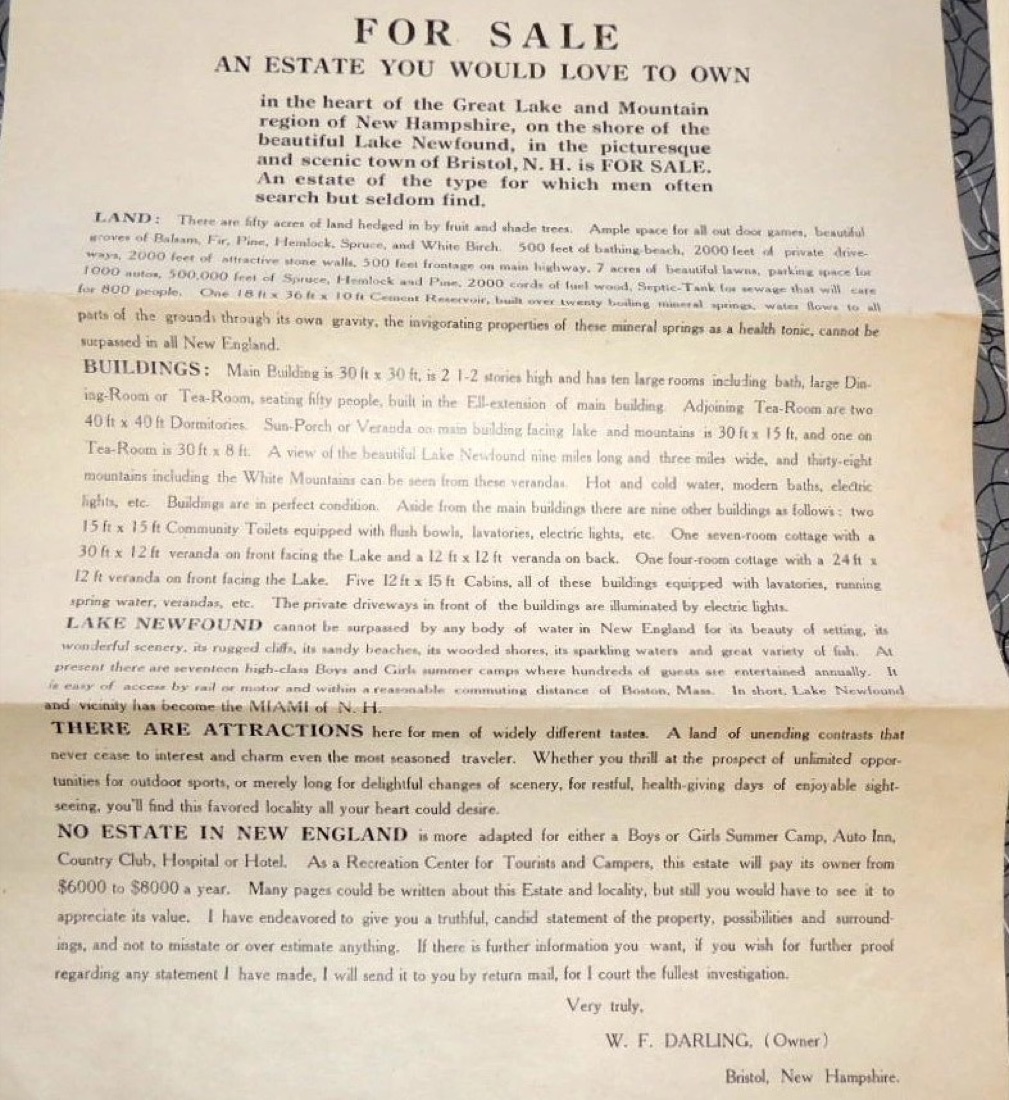
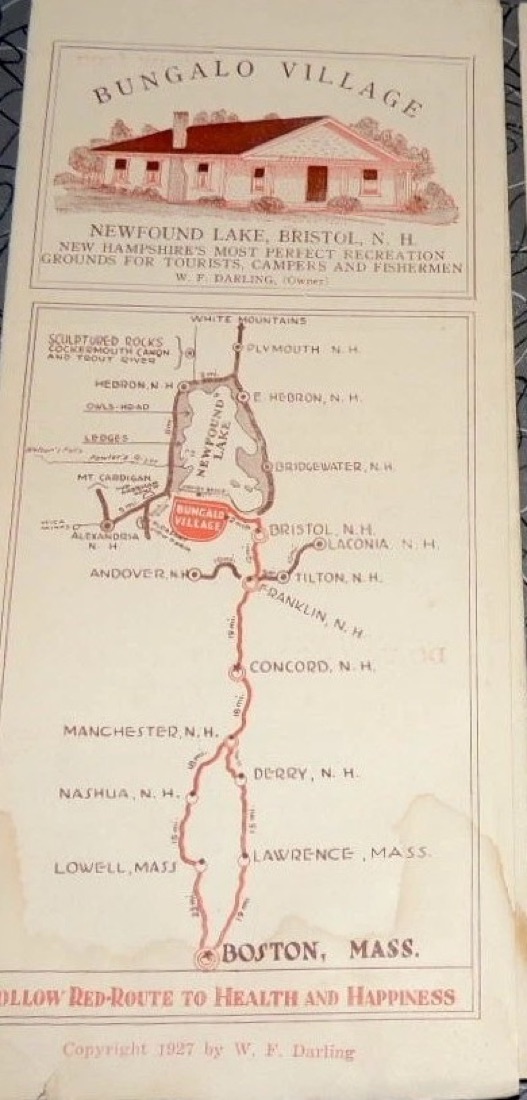
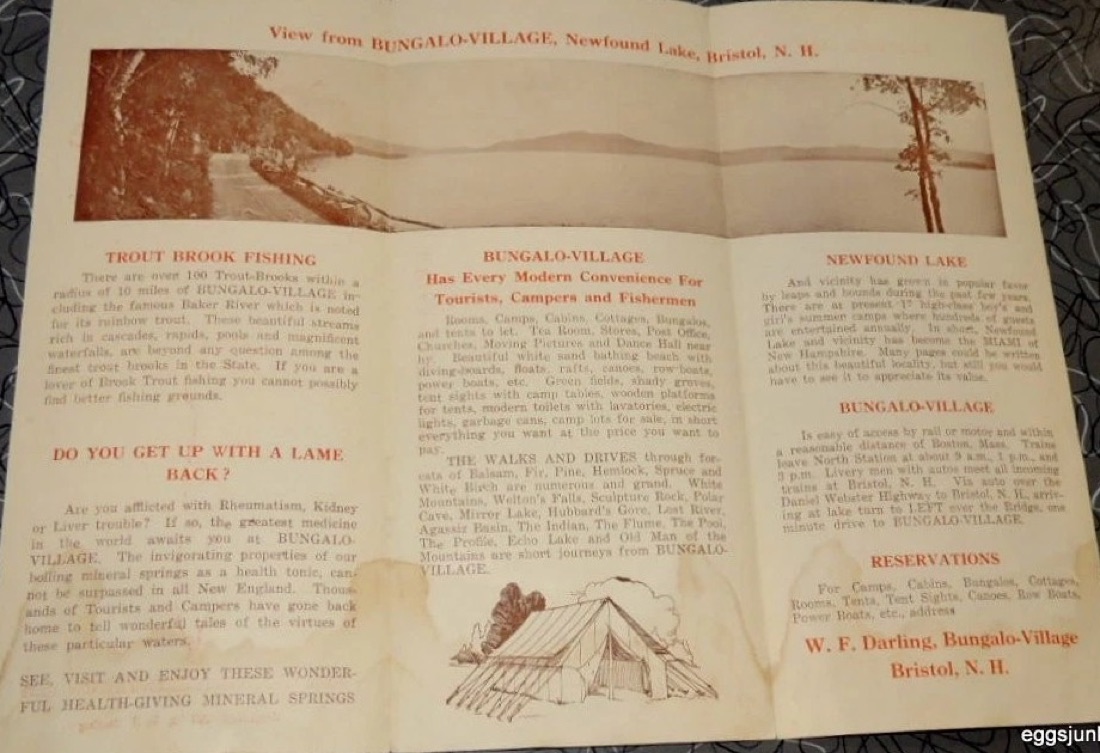
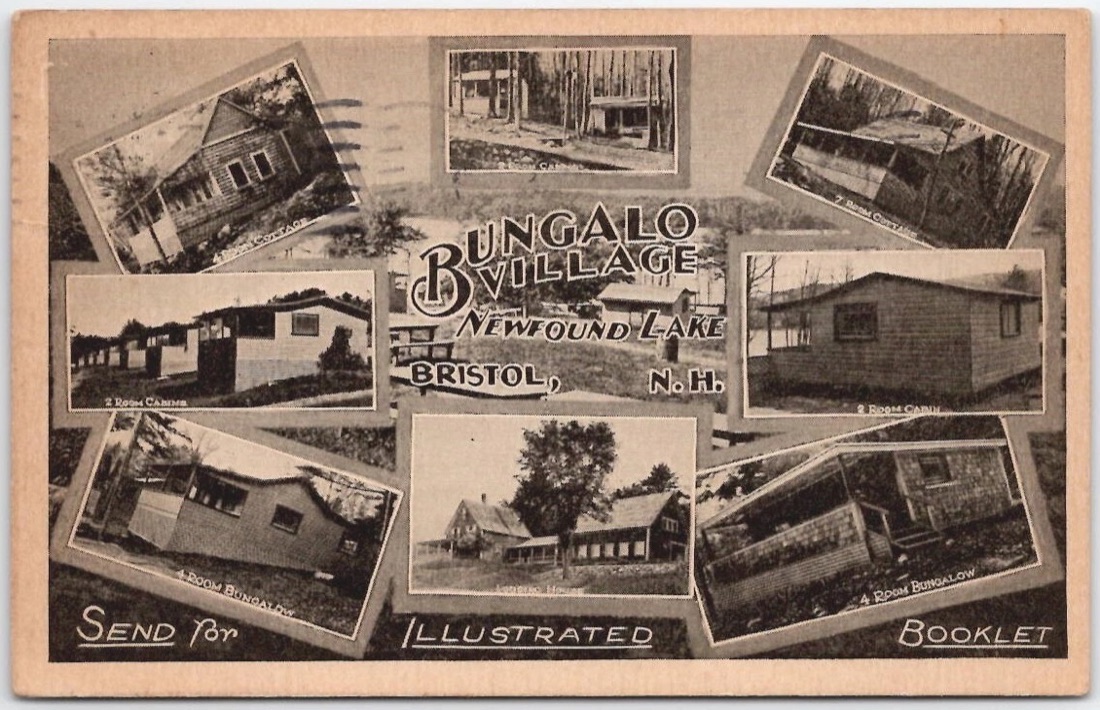
By 1927 the colony bears its distinctive name — the sales brochure, marked “Copyright 1927,” spells it Bungalo-Village — and Darling mounts a campaign to sell it: a broadside crowns the west shore “The ‘Miami’ of New Hampshire,” and letters to prospective partners promise fifteen percent a year. No buyer takes the whole, and the village keeps renting cottages — cards postmarked into 1931 still invite guests to “send for illustrated booklet.”
1934 – mid-century
The Hewitt years — open the year ’round
In 1934 the village passes from the Darlings to the Hewitts: an April envelope still reads “Darling’s Bungalo Village,” while by August the cards carry the imprint “R. S. Hewitt, Prop.” Mr. & Mrs. Hewitt — “Managing Owners” — run it year-round: in winter the Community Key by the road becomes the Bungalo Ski Lodge, with heated cabins, family-style meals, dancing by the huge fireplace, and the only ski trail in Bristol. A Ski Lodge card even steers winter guests to lessons a few miles away with Charles N. Proctor — a 1928 U.S. Olympian and one of the era’s foremost instructors, who laid out ski trails across New Hampshire.
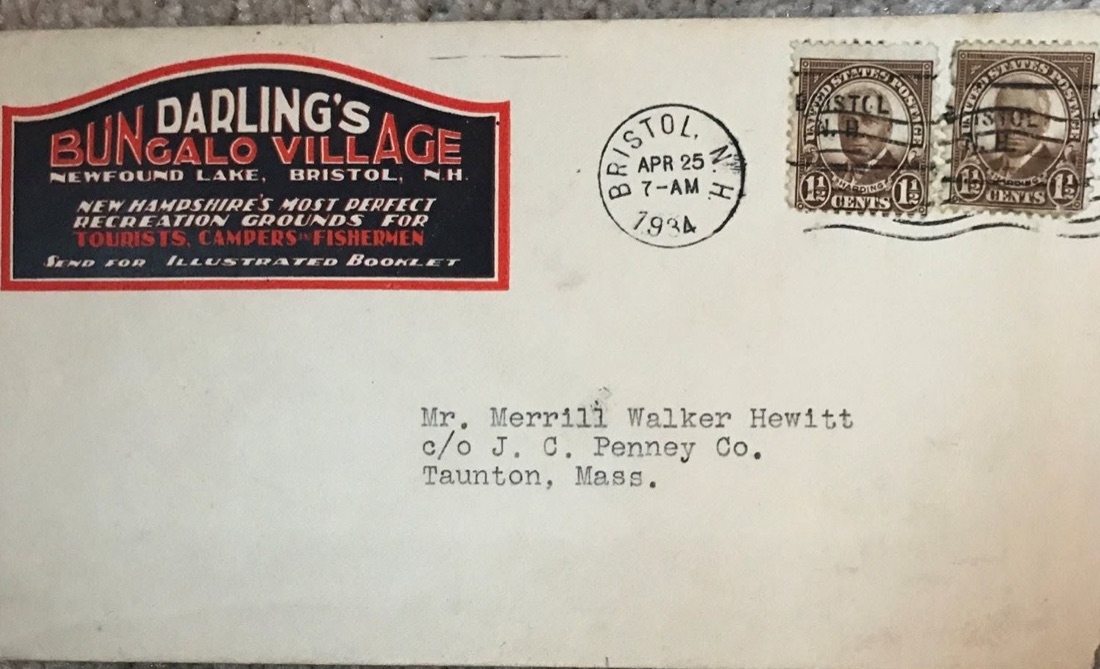
April 1934 — still “Darling’s Bungalo Village,” addressed to Merrill Walker Hewitt. 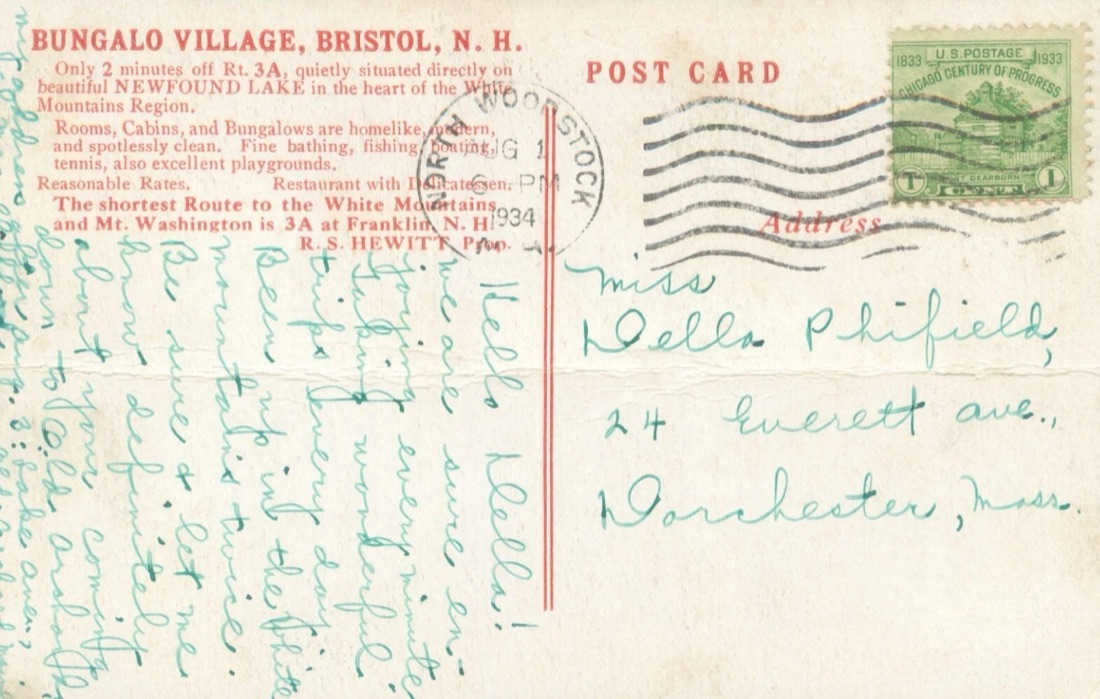
August 1934 — “R. S. Hewitt, Prop.” 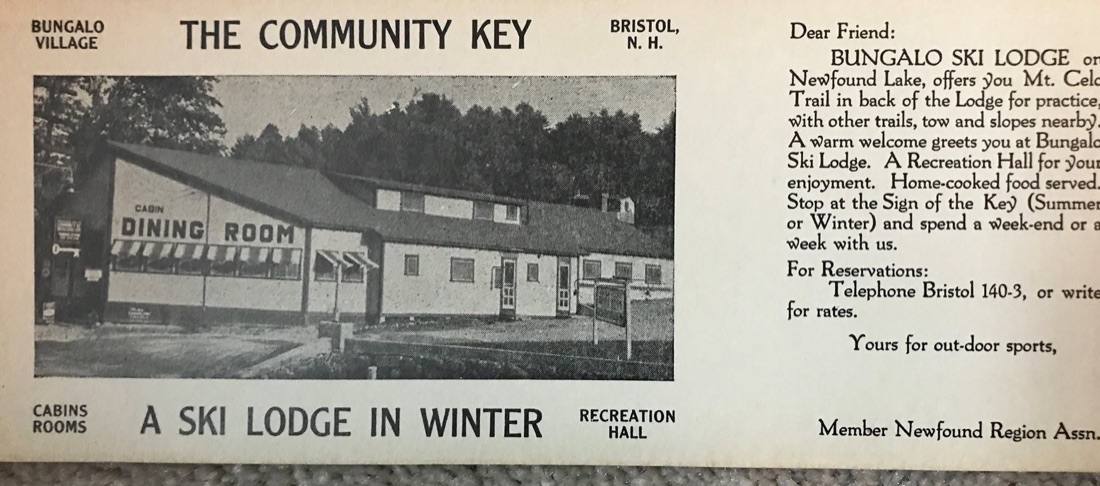
The Community Key — “a ski lodge in winter.” 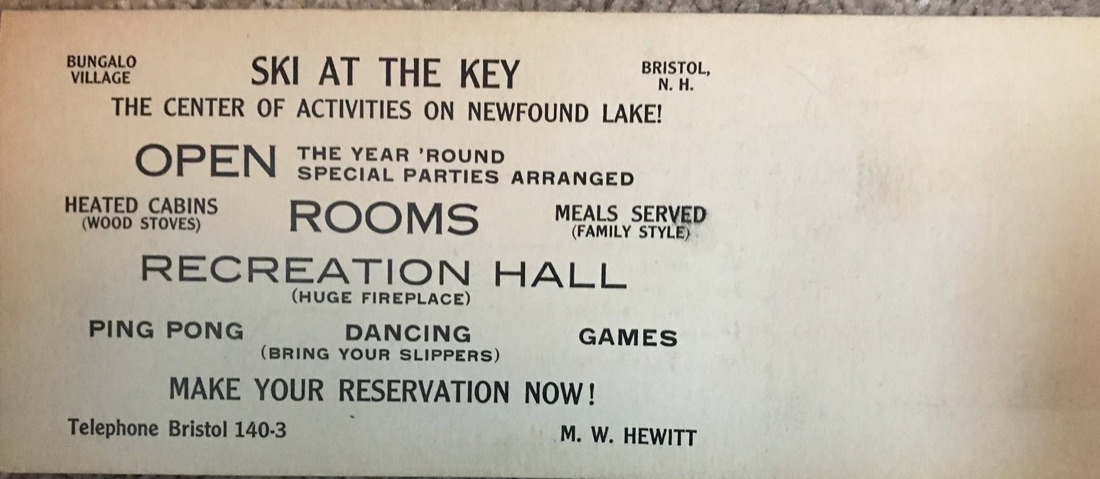
“Ski at the Key … bring your slippers.” — M. W. Hewitt. 
The Ski Lodge’s own notice — “the only ski trail in Bristol,” ski classes with Charles N. Proctor, and slopes at Mt. Cardigan. Signed M. W. Hewitt. (Tap to read it in full.) 
Charles N. Proctor — 1928 U.S. Olympian, and the instructor the Bungalo Ski Lodge sent its winter guests to. Boston Globe, 1928 (public domain). 
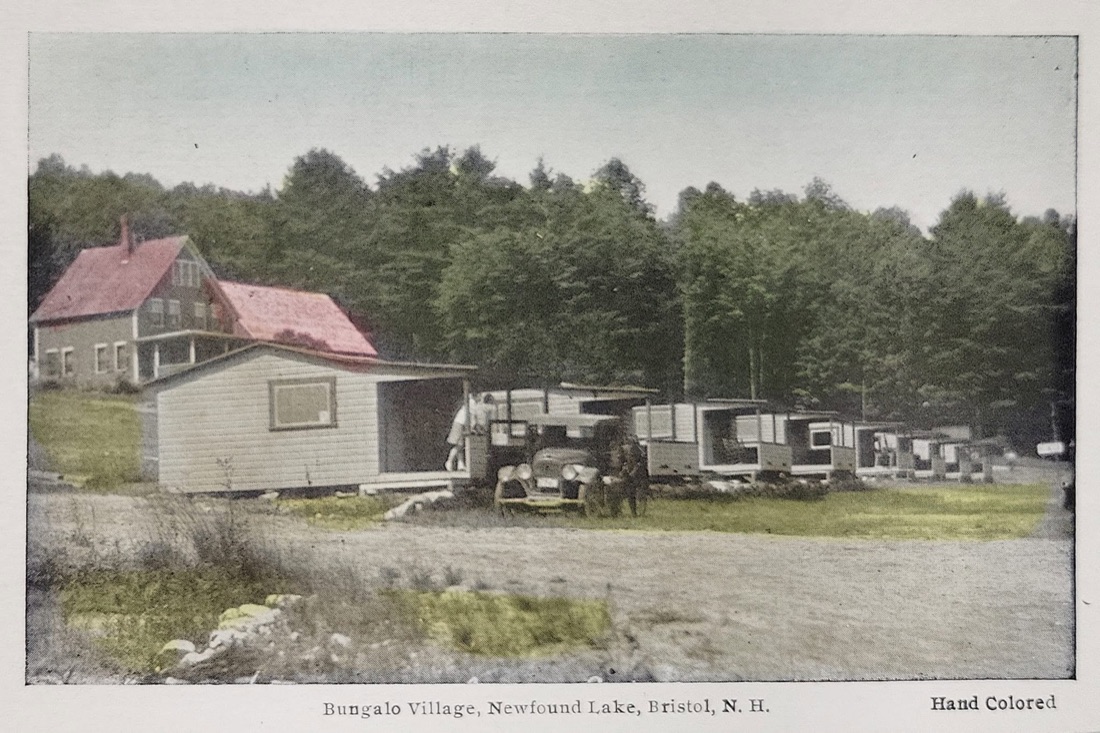
A village cottage in 1943 — freshly built, with the older cottages on the rise behind. ca. 1935–1955
The postcard era
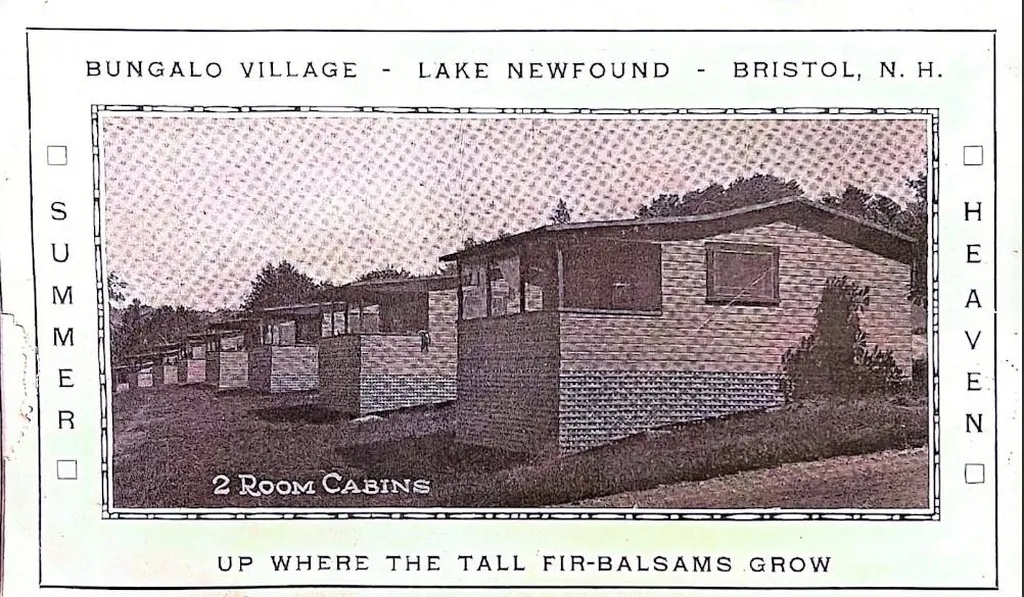
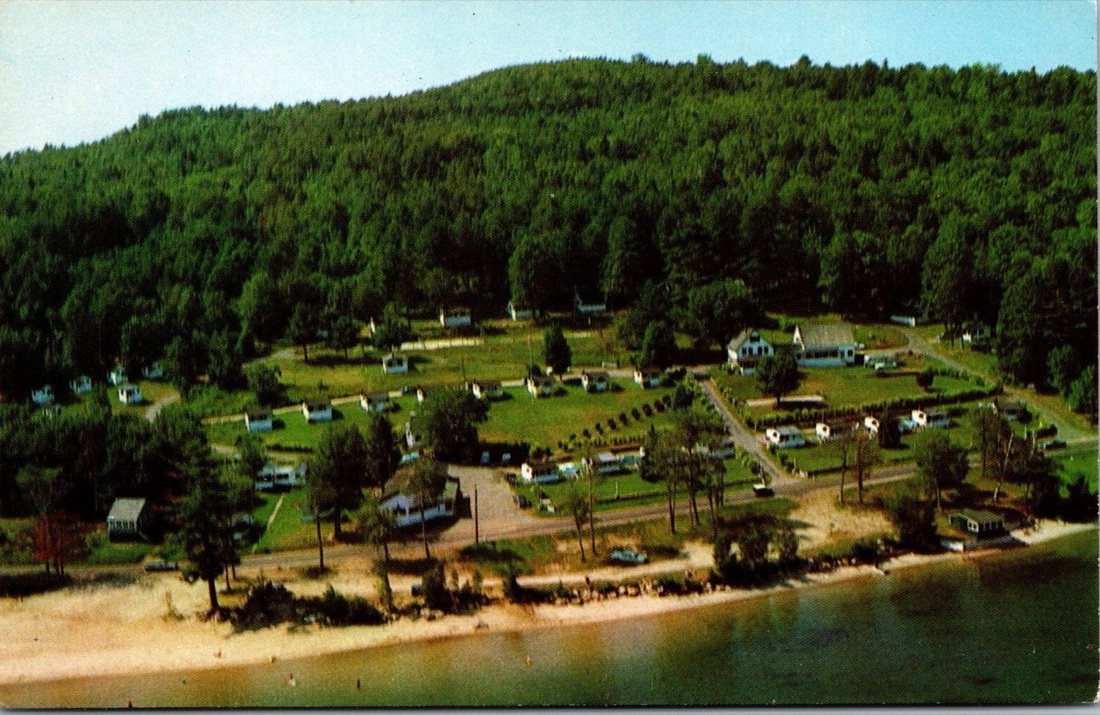
Tichnor Brothers of Boston and Curt Teich of Chicago print linen-texture postcards of the village — the shore road, the cottages by number, the beach. The printed back of one card describes it: “Bungalo Village, on the west shore of Newfound Lake, has thirty-eight cozy, well equipped bungalows and main lodge, commanding a fine view of lake and mountains.”
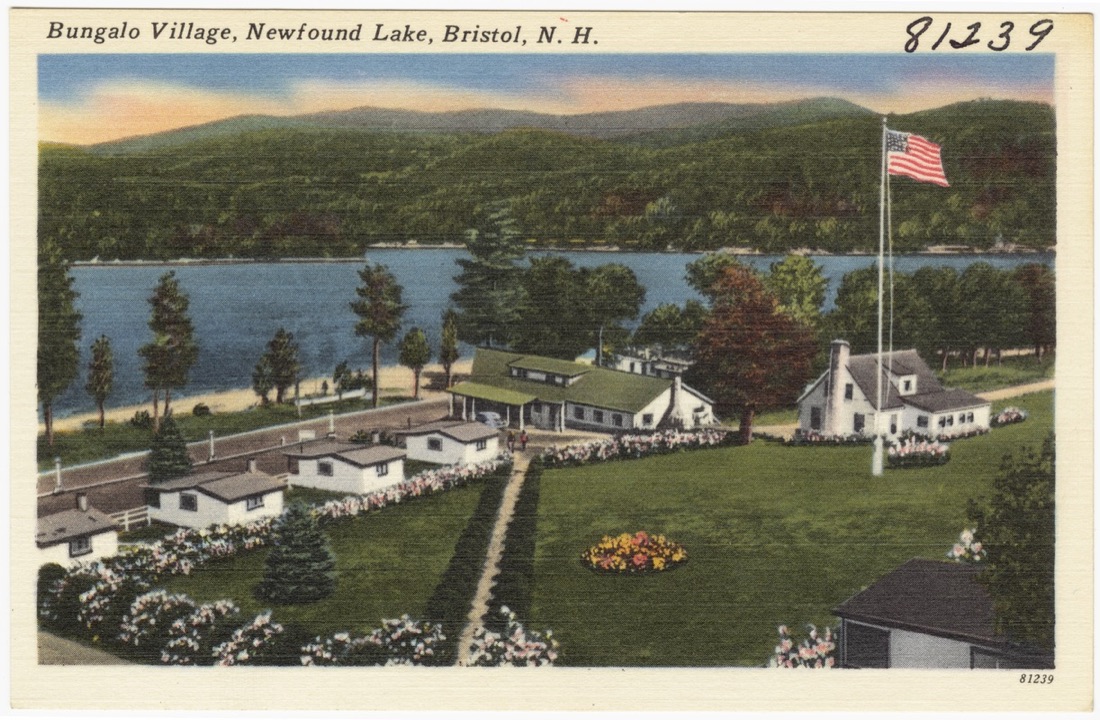
Bungalo Village, Newfound Lake, Bristol, N.H.Tichnor Brothers Postcard Collection, Boston Public Library. No known copyright restrictions. 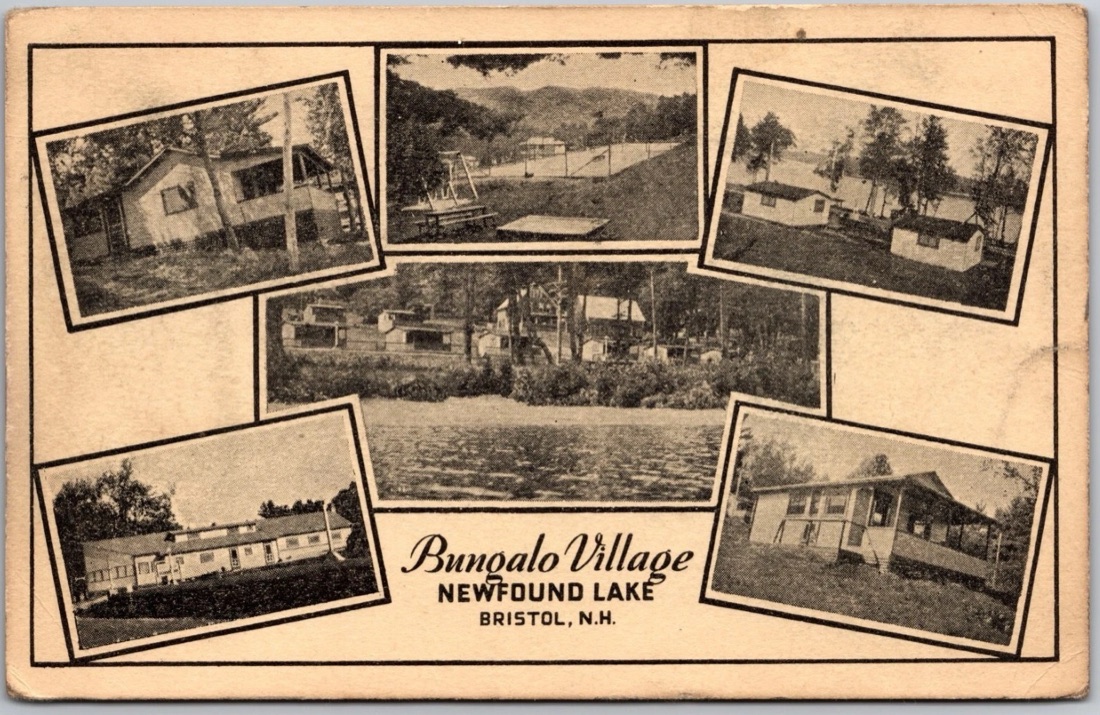
Six views of the village — cottages, tennis court, lodge, and shore, 1939. 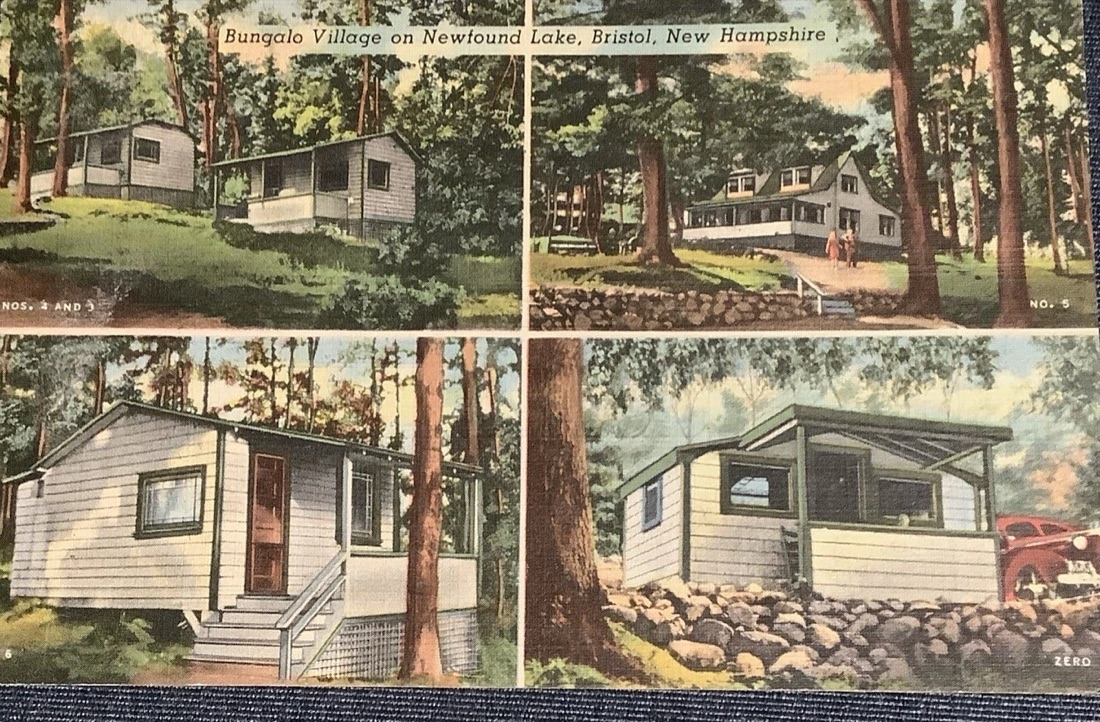
The cottages by number — Nos. 3 & 4, 5, 6, and “Zero.” Curt Teich linen, 1943. 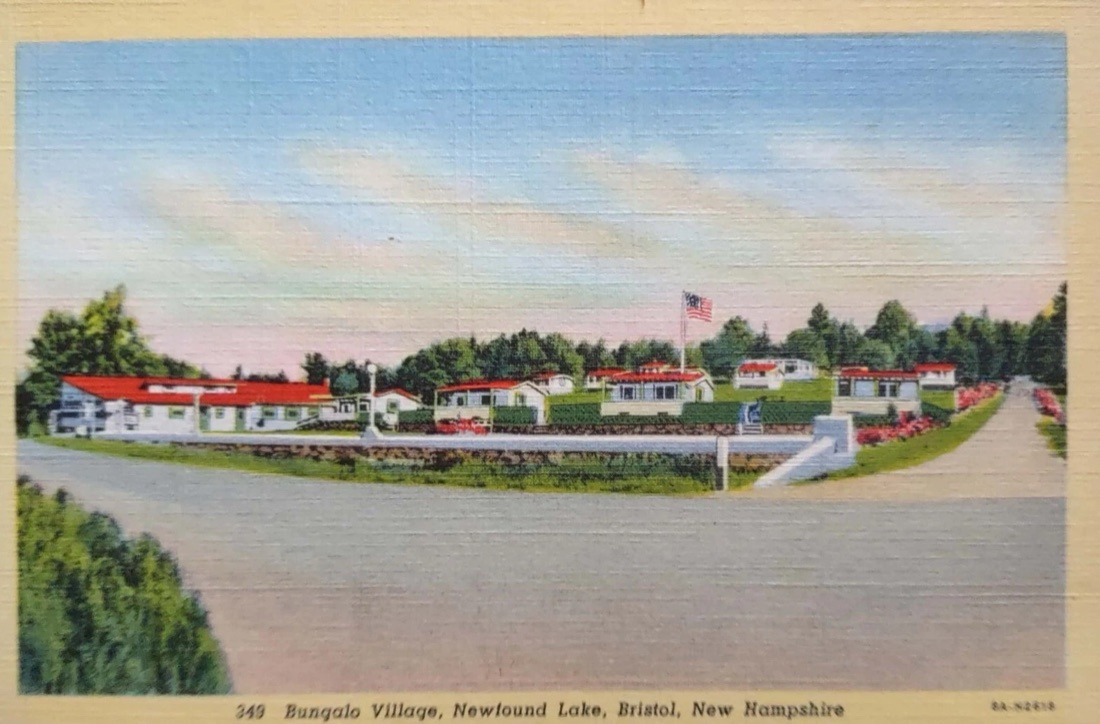
Down the west shore road — Curt Teich linen, printed 1938. 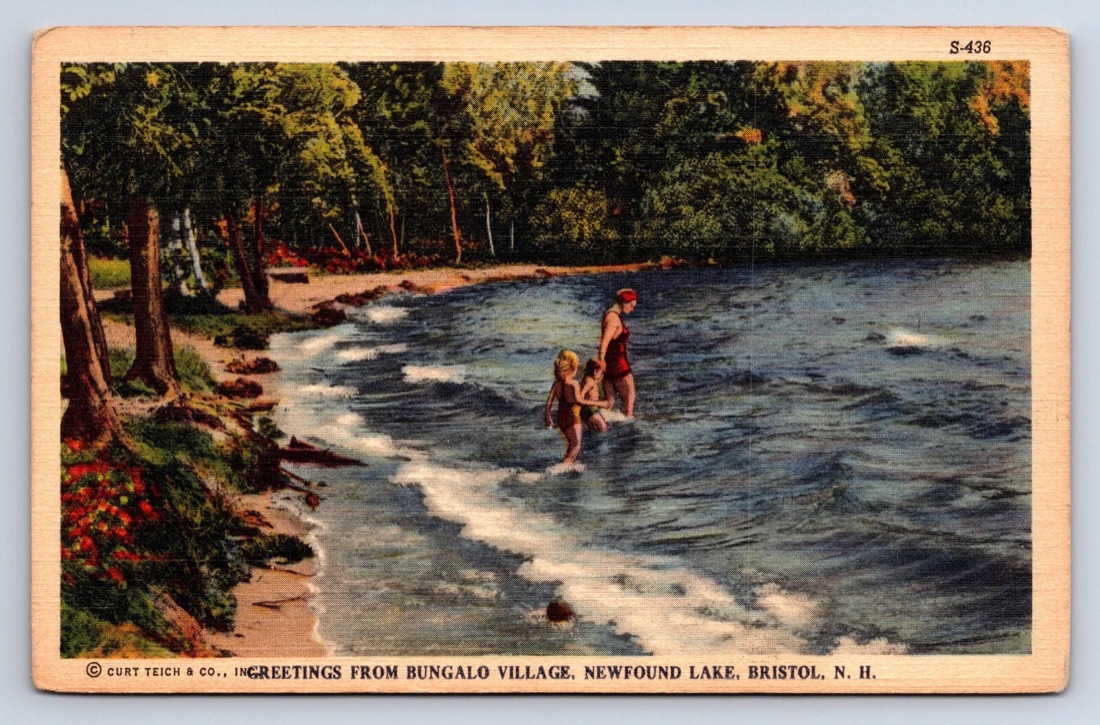
“Greetings from Bungalo Village” — bathers at the beach. Curt Teich linen, 1940. 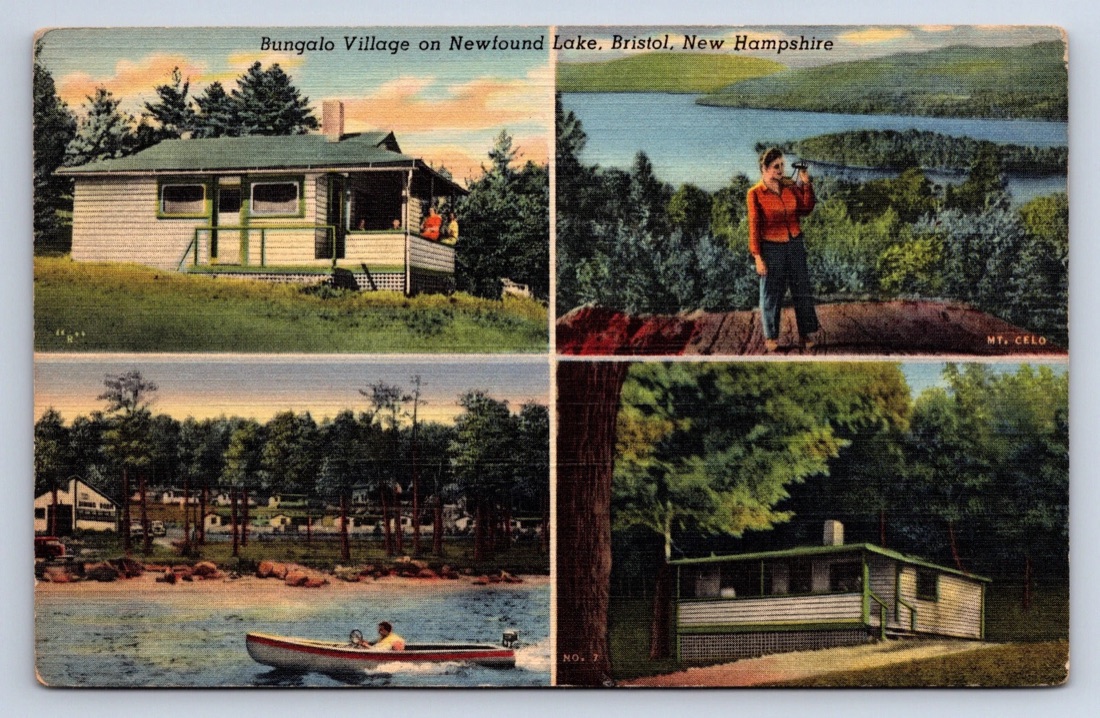
A bungalow, the lookout, the shore, and No. 7 — Curt Teich linen, 1943. 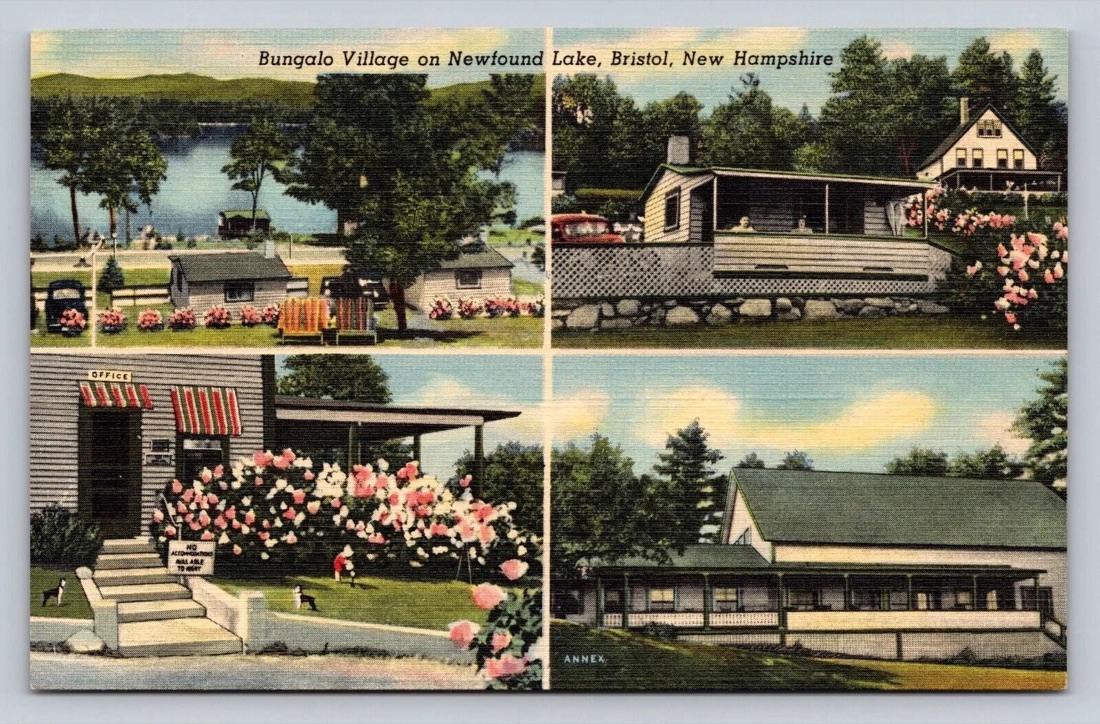
The office and the annex — four-view linen card. Mid-century
The housekeeping-cottage tradition
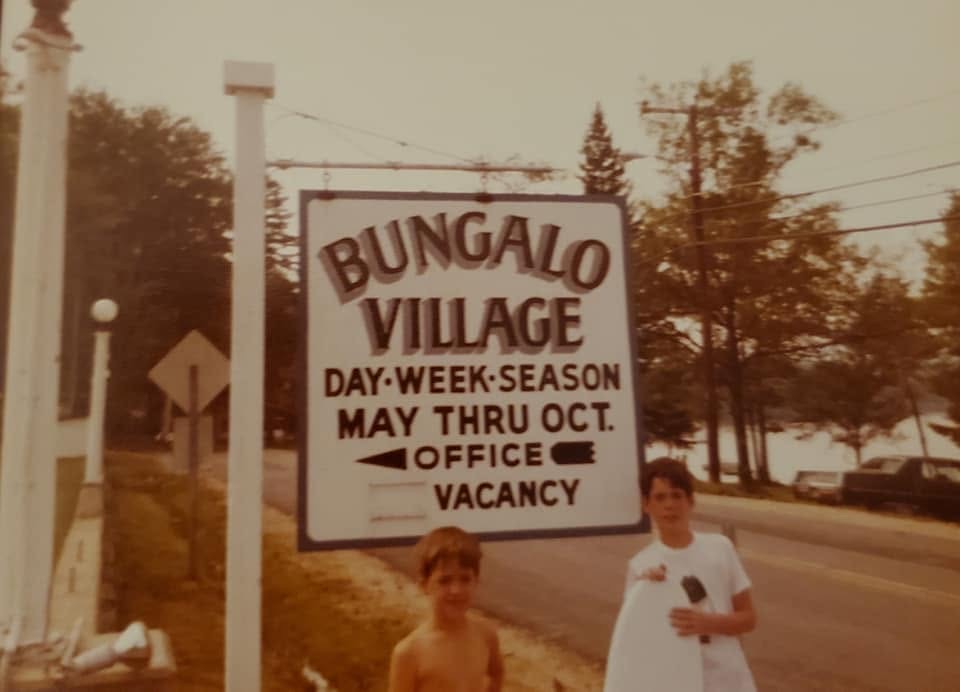
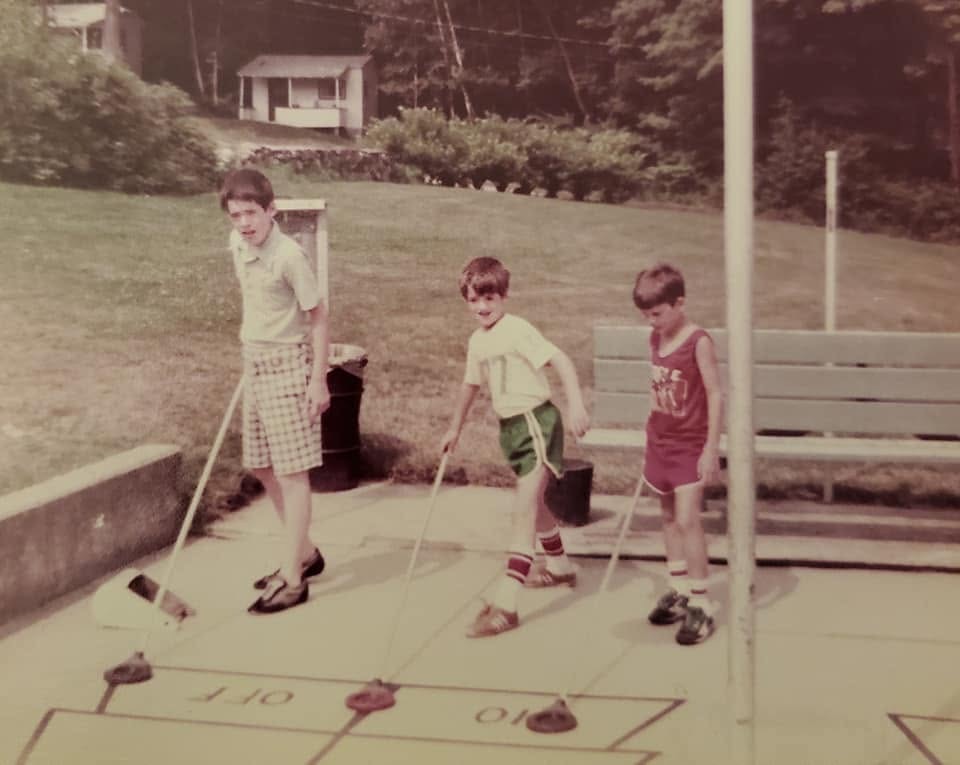
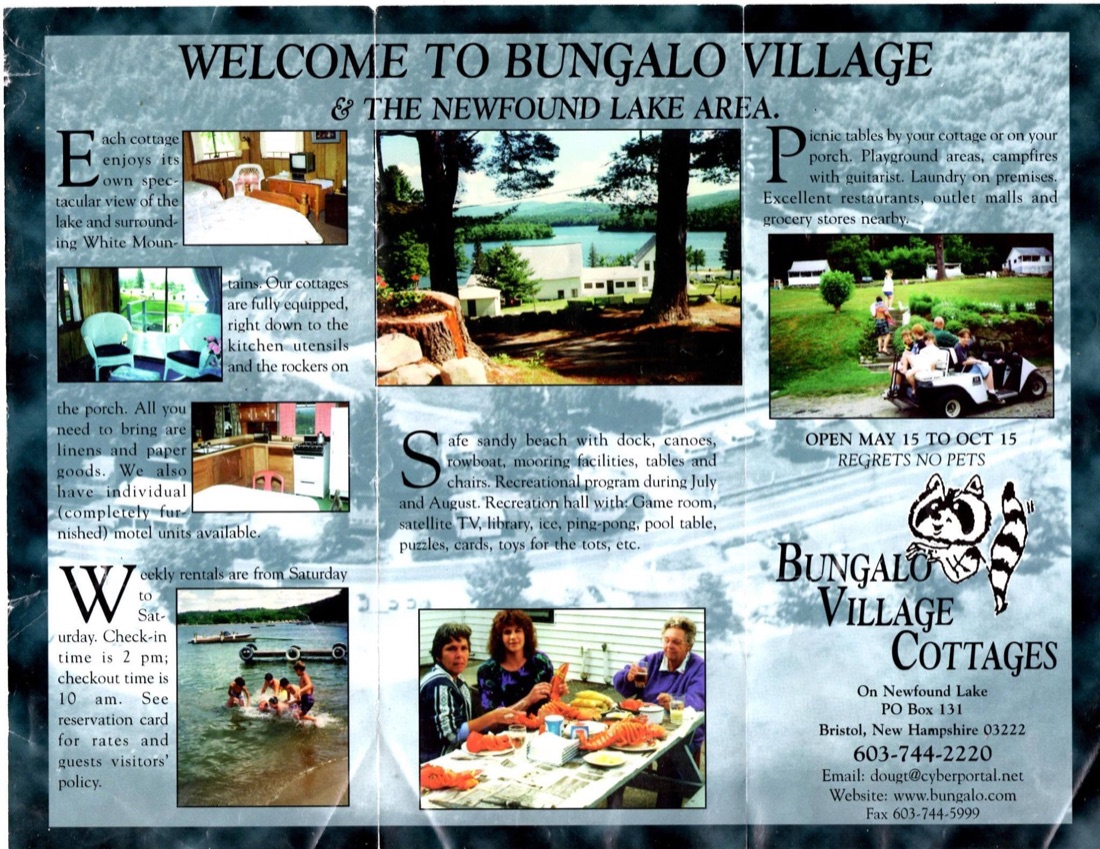
Through the postwar decades, Bungalo Village operates as a classic rental colony: guests bring their own linens, families return the same week every summer, and evenings center on the beach, the porches, the dining room, and the rec hall.
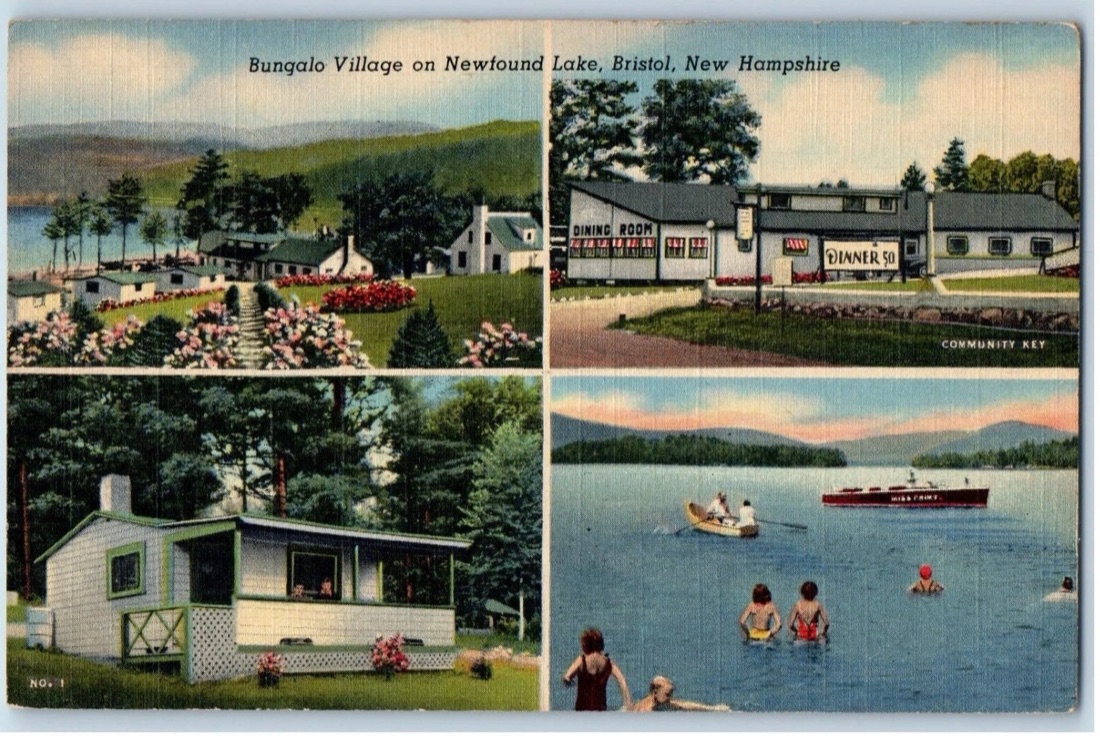
Four views, 1951 — the grounds, the dining room (“Dinner 50¢”), a cottage, and the beach. 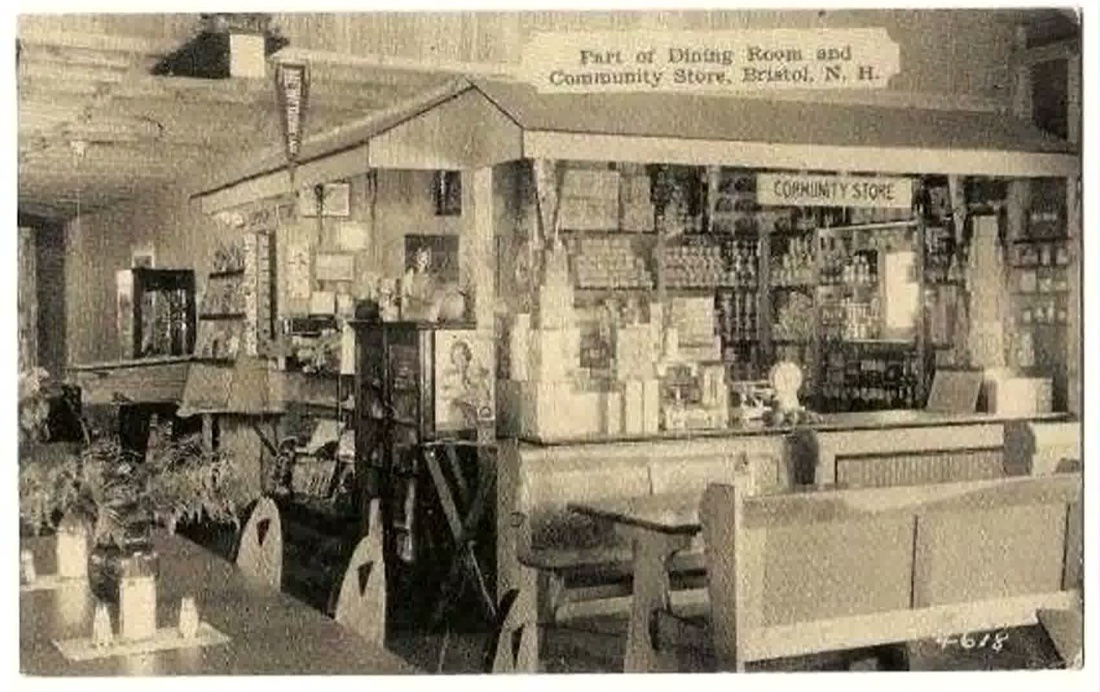
Inside the community store and dining room. 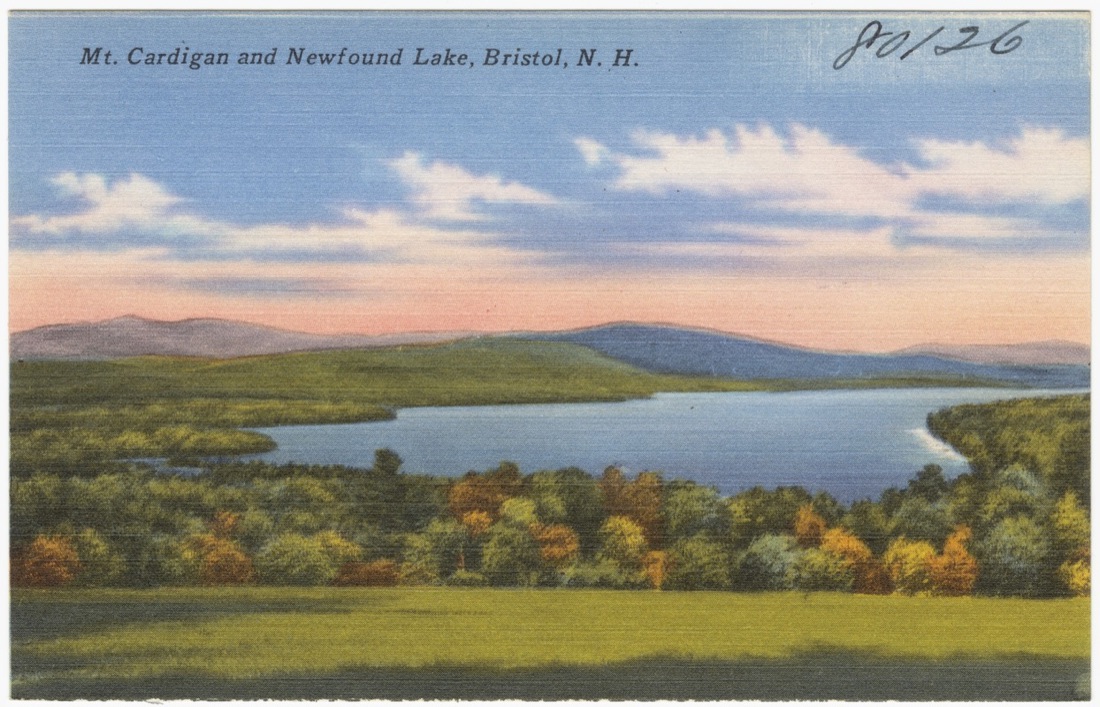
Mt. Cardigan across the lake — the view from the village.Tichnor Brothers Postcard Collection, Boston Public Library. No known copyright restrictions. 1961–1979
Your hosts, the Parsons
In 1961 the village — which had passed from the Hewitts by way of the Nelson family — is bought by Bob and Marjorie Parsons. Their postcard of the era puts it plainly: “The ideal vacation spot for the entire family. Cozy housekeeping cottages accommodating from 2 to 9 persons. Reasonable rates. Your Hosts: Bob and Marjorie Parsons.”
1979–2004
The Thompson years
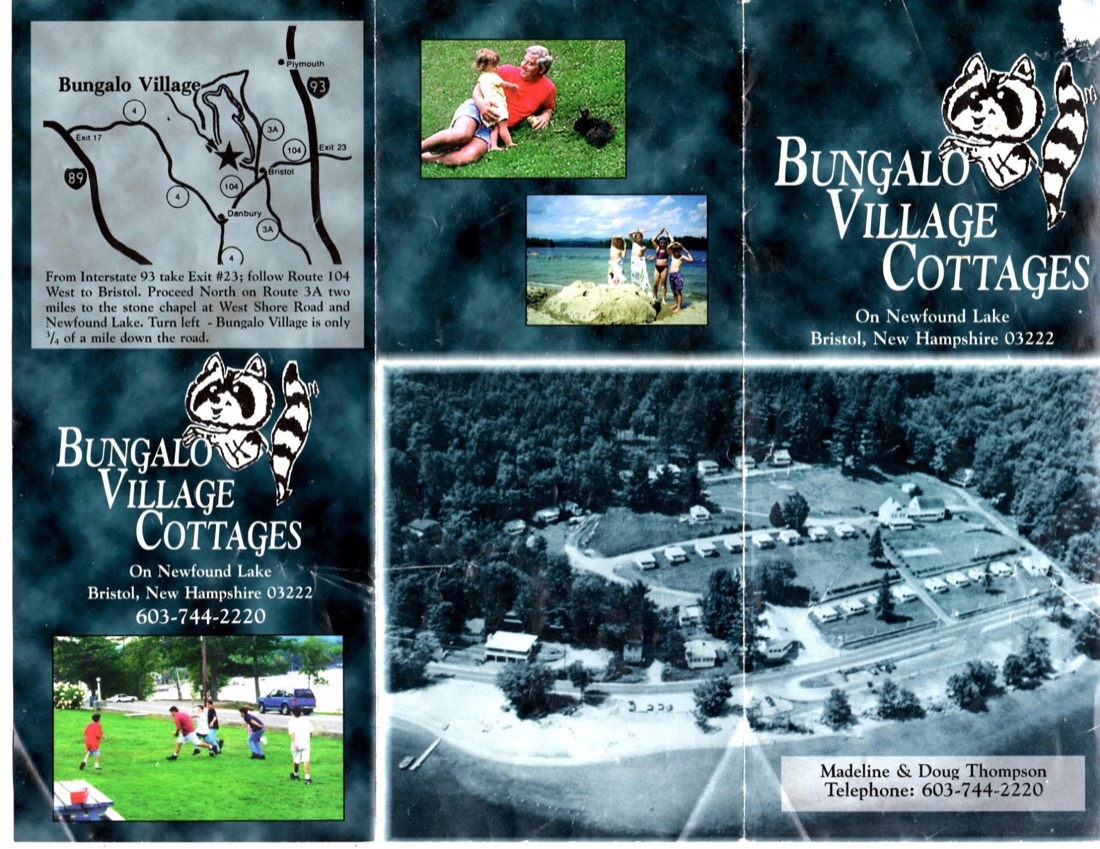
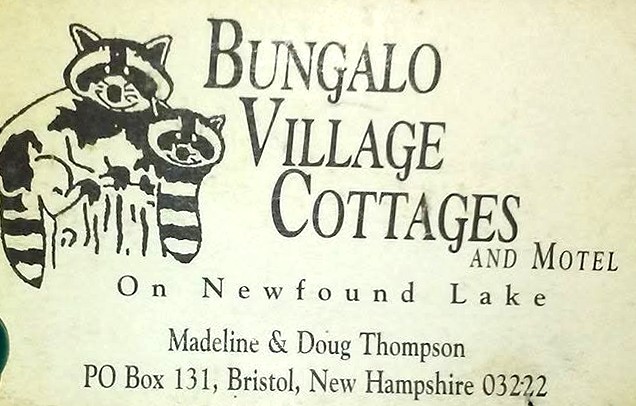
Douglas and Madeline Thompson buy the colony in 1979 and keep the rental-village tradition going for a quarter century — the last owners to run Bungalo Village as a summer cottage colony, advertising its cozy bungalows (and their raccoon mascot) to a new generation of lake families.
2004
The colony changes hands
After roughly eight decades as a rental compound, Bungalo Village is sold, and the individual cottages are offered for sale to permanent owners — the first time in the colony’s history the cottages are individually owned.
2005
Newfound Sands is established
The colony becomes Newfound Sands, a shorefront condominium of thirty-four individually owned cottages — though everyone still likes to call it Bungalo Village. The main lodge, heart of the old village, still stands, and the beach remains shared, as it has been for a century.
Today
A summer village still
A century after Darling laid out his cottages, Newfound Sands remains what it has always been: a simple, friendly summer village on one of the clearest lakes in New England — in every season.
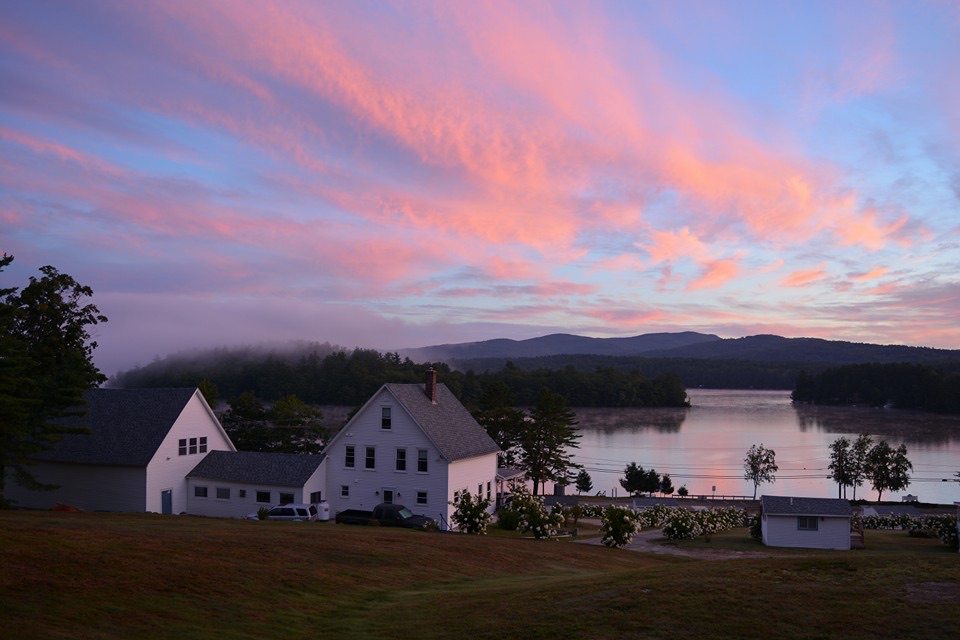
Daybreak over the lake — the lodge at first light. 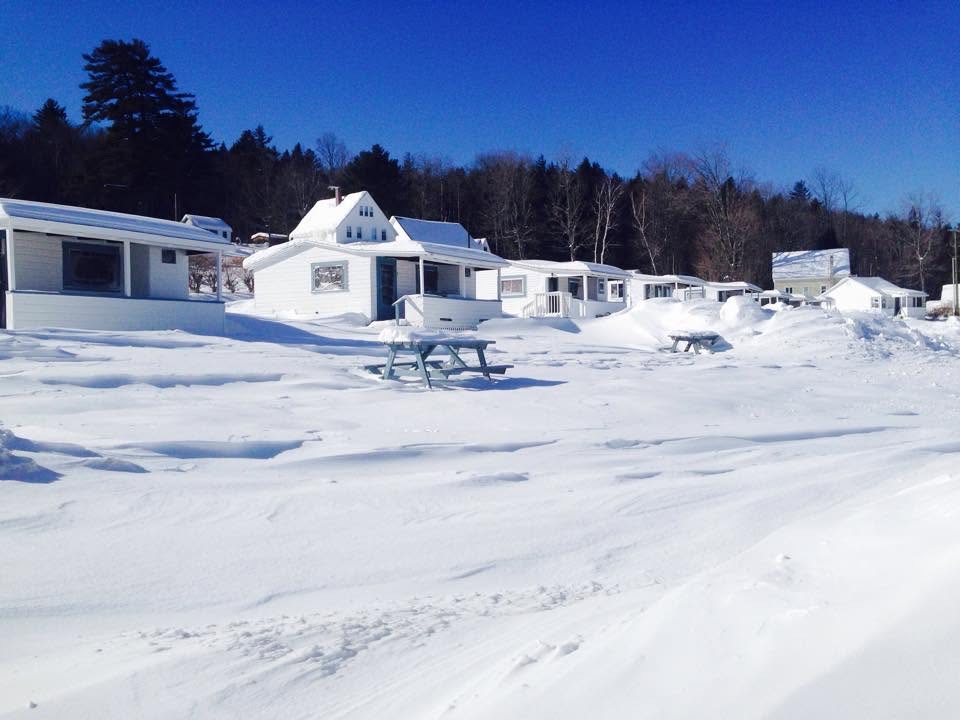
The village asleep — deep winter on the west shore.
From the Album
Bungalo Village Through the Years
Seven mini-albums of postcards, brochures, and snapshots — from the farm years to the village today.